
分布式锁
redis 实现
提示
查看集成 redis 常见问题和解决方案(包含 redis 分布式锁的应用)
org.springframework.integration.redis.util.RedisLockRegistry 类
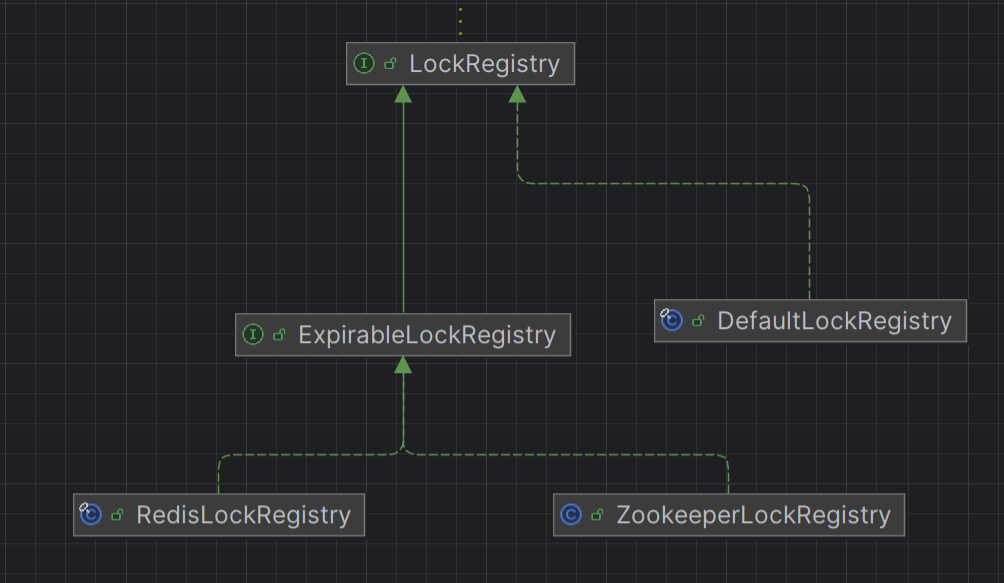
获取锁
Acquires the lock only if it is free at the time of invocation. Acquires the lock if it is available and returns immediately with the value true. If the lock is not available then this method will return immediately with the value false.
A typical usage idiom for this method would be:
Lock lock = ...;
if (lock. tryLock()) {
 try {
   // manipulate protected state
 } finally {
     lock. unlock();
 }
} else {
 // perform alternative actions
}
This usage ensures that the lock is unlocked if it was acquired, and doesn't try to unlock if the lock was not acquired.
Returns:
trueif the lock was acquired andfalseotherwise
public boolean tryLock() {
            try {
                return this.tryLock(0L, TimeUnit.MILLISECONDS);
            } catch (InterruptedException var2) {
                Thread.currentThread().interrupt();
       return false;
}
查看 tryLock 方法
 public boolean tryLock(long time, TimeUnit unit) throws InterruptedException {
            long now = System.currentTimeMillis();
            if (!this.localLock.tryLock(time, unit)) {
                return false;
            } else {
                try {
                    long expire = now + TimeUnit.MILLISECONDS.convert(time, unit);

                    boolean acquired;
                    while(!(acquired = this.obtainLock()) && System.currentTimeMillis() < expire) {
                        Thread.sleep(100L);
                    }

                    if (!acquired) {
                        this.localLock.unlock();
                    }

                    return acquired;
                } catch (Exception var9) {
                    Exception e = var9;
                    this.localLock.unlock();
                    this.rethrowAsLockException(e);
                    return false;
                }
            }
        }
查看 obtain 方法,查看 execute 方法的第一个参数RedisLockRegistry.this.obtainLockScript,参数为 RedisLockRegistry的属性
  private boolean obtainLock() {
            Boolean success = (Boolean)RedisLockRegistry.this.redisTemplate.execute(RedisLockRegistry.this.obtainLockScript, Collections.singletonList(this.lockKey), new Object[]{RedisLockRegistry.this.clientId, String.valueOf(RedisLockRegistry.this.expireAfter)});
            boolean result = Boolean.TRUE.equals(success);
            if (result) {
                this.lockedAt = System.currentTimeMillis();
            }

            return result;
        }
这里是用了 Lua 脚本,是为了保证原子性,所有操作使用一个 lua 脚本完成,就不会有并发安全问题。详细查看链接。
  public RedisLockRegistry(RedisConnectionFactory connectionFactory, String registryKey, long expireAfter) {
        this.locks = new ConcurrentHashMap();
        this.clientId = UUID.randomUUID().toString();
        this.executor = Executors.newCachedThreadPool(new CustomizableThreadFactory("redis-lock-registry-"));
        Assert.notNull(connectionFactory, "'connectionFactory' cannot be null");
        Assert.notNull(registryKey, "'registryKey' cannot be null");
        this.redisTemplate = new StringRedisTemplate(connectionFactory);
        this.obtainLockScript = new DefaultRedisScript("local lockClientId = redis.call('GET', KEYS[1])\nif lockClientId == ARGV[1] then\n  redis.call('PEXPIRE', KEYS[1], ARGV[2])\n  return true\nelseif not lockClientId then\n  redis.call('SET', KEYS[1], ARGV[1], 'PX', ARGV[2])\n  return true\nend\nreturn false", Boolean.class);
        this.registryKey = registryKey;
        this.expireAfter = expireAfter;
    }
脚本解释:
获取当前锁的客户端 ID:
- 脚本首先获取键 KEYS[1] 的值,这个值表示当前锁的持有者。
- 判断锁的状态:
- 如果锁的持有者是当前客户端(lockClientId == ARGV[1]),则更新锁的有效期。
- 如果锁的持有者不存在(not lockClientId),则设置新的锁。
- 如果锁的持有者不是当前客户端,则返回 false 表示无法获取锁。
示例 如果有以下几个参数:
KEYS[1] = "my_lock" ARGV[1] = "client1" ARGV[2] = 30000 (30秒)- 获取锁的客户端 ID:
- 脚本执行 redis.call('GET', 'my_lock') 获取当前锁的持有者。
- 判断锁的状态:
- 如果当前锁的持有者是 "client1",则执行 redis.call('PEXPIRE', 'my_lock', 30000) 更新锁的有效期,并返回 true。
- 如果当前锁的持有者不存在,则执行 redis.call('SET', 'my_lock', 'client1', 'PX', 30000) 设置新的锁,并返回 true。
- 如果当前锁的持有者不是 "client1",则返回 false。
- 总结 这段 Lua 脚本主要用于实现 Redis 中的分布式锁功能,通过检查和设置锁的状态来确保只有一个客户端能够获得锁,并且可以更新锁的有效期。这种实现方式可以有效地防止竞态条件,并保证锁的一致性和安全性。
- 获取锁的客户端 ID:
zookeeper 实现
https://zhuanlan.zhihu.com/p/639756647
RedisLockRegistry案例
利用 Spring AOP 实现分布式锁
更新日志
fde06-于